


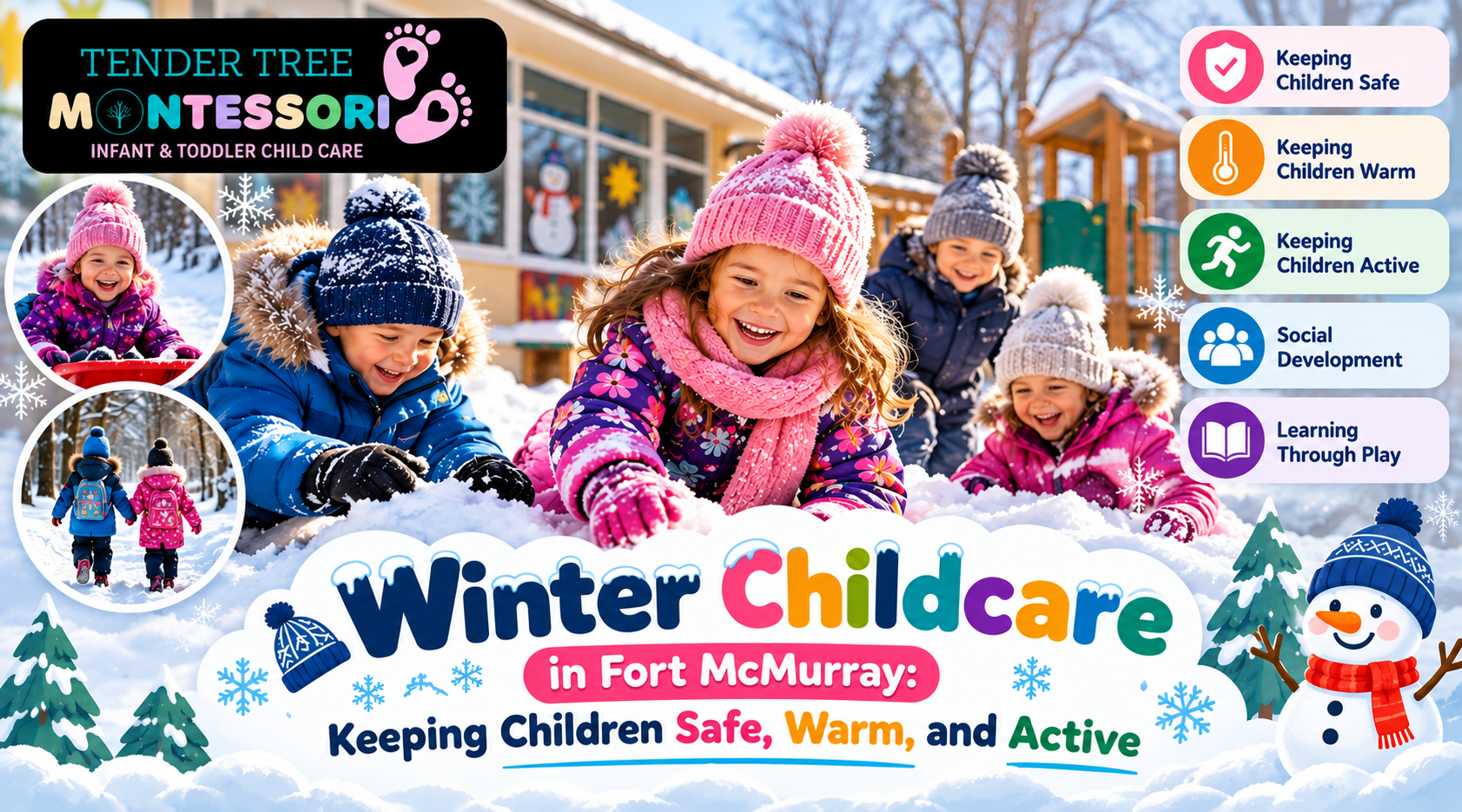
Winter Childcare in Fort McMurray: Keeping Children Safe, Warm, and Active
Winter Childcare in Fort McMurray: Keeping Children Safe, Warm, and Active
Winter in Fort McMurray brings freezing temperatures, snow, icy surfaces, and shorter daylight hours. These conditions can affect how children travel to childcare, participate in outdoor activities, and maintain their everyday routines.
For working families, finding dependable winter childcare in Fort McMurray is about more than keeping children indoors and warm. Parents need a setting that prioritises safety while encouraging learning, movement, creativity, and social development.
Young children benefit from regular opportunities to explore, play, and interact with others throughout the year. However, winter weather requires childcare providers to adjust activities, clothing practices, supervision, and daily schedules according to changing conditions.
Tender Tree Montessori provides a starting point for families exploring childcare options in Fort McMurray. Understanding what quality winter care involves can help parents make informed decisions and choose a program that suits their child’s needs.
1. Keeping Children Safe During Extreme Winter Weather
Cold-weather safety is one of the most important parts of winter childcare. Children lose body heat more quickly than adults in certain conditions, so caregivers must consider temperature, wind, exposure time, clothing, and each child’s age.
Dressing Children in Warm, Appropriate Layers
Layered clothing helps children stay comfortable when moving between cold outdoor conditions and heated indoor spaces.
Parents can prepare children with:
- A warm base layer that keeps the skin comfortable.
- Insulating clothing, such as fleece or wool.
- A weather-resistant winter coat and snow pants.
- Warm mittens, a winter hat, and suitable socks.
- Insulated winter boots that fit properly and provide traction.
Extra mittens, socks, and clothing are useful because snow and moisture can make items uncomfortable. Parents should label personal belongings to reduce mix-ups.
For infants and toddlers, caregivers should pay particular attention to clothing fit, comfort, and safe sleep practices. Bulky winter clothing should not be worn under the harness of a car seat because it can interfere with a secure fit. Remove bulky layers before buckling a child and use suitable blankets or outer layers over the secured harness.
Monitoring Temperature and Wind Chill
Wind chill describes how cold conditions can feel on exposed skin. It is an important factor when deciding whether outdoor activities are appropriate.
Childcare providers should monitor current weather alerts, temperature, wind chill, and local conditions before taking children outside. They should also establish clear procedures for shortening or cancelling outdoor activities when the weather becomes unsafe.
Parents should ask how the centre decides when outdoor play is suitable and how staff respond if a child becomes uncomfortable.
Recognising Signs of Cold Exposure
Caregivers should watch for shivering, unusual tiredness, numbness, pale or waxy skin, and changes in behaviour. Young children may not recognise or communicate cold discomfort clearly.
If a child appears too cold, caregivers should bring them indoors, remove wet clothing, and warm them gradually. Suspected hypothermia or frostbite requires prompt medical assessment. Severe symptoms, such as confusion or unusual drowsiness, warrant emergency assistance.
A strong winter childcare plan includes staff awareness, appropriate supervision, and clear procedures for responding to cold-related concerns.
2. Keeping Children Active Indoors During Winter
Children still need opportunities to move when snow, ice, or extreme cold makes outdoor play unsuitable. Quality winter childcare includes indoor activities that encourage physical movement without compromising safety.
Organising Indoor Movement Activities
Indoor movement games help children practise balance, coordination, and body awareness. Caregivers can adapt activities to the available space and children’s ages.
Suitable options include:
- Simple obstacle courses using safe, age-appropriate equipment.
- Dancing to children’s music.
- Movement games that involve jumping, stretching, or marching.
- Soft-ball activities in a designated play area.
- Follow-the-leader games and action songs.
Staff should remove tripping hazards, supervise activities closely, and adjust games for children with different abilities.
Using Creative Activities to Encourage Learning
Winter also offers opportunities for creative learning. Drawing snowflakes, making paper mittens, exploring winter colours, and reading seasonal picture books help children use their imagination.
Sensory activities can introduce concepts such as texture, temperature, and shape. Materials must be age-appropriate, non-toxic, and safe from choking hazards.
These activities support learning while keeping children engaged when outdoor conditions are unsuitable.
Balancing Active and Quiet Play
Children need a mix of energetic play and calm activities. Storytelling, puzzles, building blocks, music, and quiet reading can help them transition between different levels of activity.
A balanced daily schedule also allows children time to rest and recover. Caregivers should adapt activities to children’s ages, interests, energy levels, and individual needs.
Related reading:
3. Supporting Healthy Routines Throughout Winter
Consistent routines help children understand what to expect during the day. Winter can disrupt family schedules through weather-related delays, difficult commutes, and changes to outdoor activities.
A predictable childcare routine can help children feel more settled despite these changes.
Maintaining Regular Meals and Snacks
Nutritious meals and snacks support children’s growth and energy needs. Childcare providers should follow appropriate food safety practices and consider documented allergies, dietary restrictions, and family instructions.
Parents should ask how the centre manages meals, drinking water, allergies, and communication about eating habits.
Warm foods may be comforting during cold weather, but the overall priority is providing suitable, balanced nutrition that meets children’s needs.
Protecting Rest and Sleep Routines
Adequate rest is important for children’s development and ability to participate in daily activities. Infants and toddlers may need different sleep schedules depending on their age and individual needs.
A suitable childcare provider should follow applicable safe-sleep guidance for infants and maintain appropriate rest arrangements for older children.
Parents can help by sharing their child’s usual sleep patterns and discussing any changes in behaviour or rest needs.
Encouraging Hygiene During Cold and Flu Season
Winter often brings increased circulation of respiratory illnesses. Regular handwashing, appropriate cleaning, good ventilation, and clear illness policies can help reduce the spread of infections.
Parents should understand when children need to stay home and how the centre handles symptoms that appear during the day.
Childcare providers should also explain how they communicate illness-related updates while respecting family privacy.
4. Choosing Affordable Childcare in Fort McMurray
Childcare costs are an important consideration for working families. However, affordable childcare in Fort McMurray should mean finding care that fits the family budget while meeting essential standards for safety, supervision, and developmental support.
Understand the Full Cost of Childcare
Before enrolling, ask for a clear breakdown of costs. Fees may vary according to the child’s age, program type, attendance schedule, and the provider’s policies.
Confirm whether registration fees, meals, supplies, late pick-up charges, or other costs apply. Ask how holidays, absences, and closures affect payments.
Comparing the total cost helps families avoid unexpected expenses.
Ask About Affordability Programs
Eligible families may qualify for government childcare affordability assistance or other support programs. Eligibility, funding arrangements, and the amount families pay can change.
Parents should check current information through official Government of Alberta childcare resources rather than relying on outdated fee estimates.
Compare Value, Not Just Price
The lowest fee does not automatically indicate the best fit. Parents should consider staff qualifications, supervision, learning activities, safety procedures, communication, and operating hours.
A centre with a convenient schedule and dependable communication may better support a family’s needs, even if its fees differ from another provider’s.
Families considering winter childcare in Fort McMurray should also ask about weather-related closures, emergency communication, and alternative arrangements when travel becomes difficult.
5. Why Location Matters for Winter Childcare
A convenient childcare location can reduce travel time and make winter mornings easier to manage. For families searching for childcare downtown Fort McMurray, location should be considered alongside program quality and safety.
Plan for Snow, Ice, and Winter Travel
Snow-covered roads, slippery walkways, and reduced visibility can affect drop-off and pick-up times. Parents should allow extra travel time and follow local road and weather advisories.
Ask whether the centre has safe entryways, clear procedures for arrivals during severe weather, and a reliable method for communicating schedule changes.
Parents should also confirm who is authorised to collect their child and how the centre verifies identity when collection arrangements change.
Check Operating Hours and Closure Policies
Winter weather can cause unexpected disruptions. Before enrolment, ask how the centre communicates emergency closures and whether it has procedures for power outages, severe weather warnings, or other emergencies.
Families with fixed work schedules should understand the centre’s opening hours, late pick-up rules, and notification procedures.
Consider the Entire Daily Journey
A convenient location can be valuable, but it should not be the only deciding factor. Parents should assess the route, parking arrangements, entryway safety, and how comfortably children can transition from outdoor clothing to indoor activities.
Tender Tree Montessori is an option for families researching childcare in Fort McMurray. Contact the centre directly to confirm its current location, available programs, operating hours, and enrolment details before making travel or childcare arrangements.
6. How Quality Childcare Supports Children’s Winter Development
Winter does not need to interrupt children’s learning. A thoughtfully planned childcare program can continue supporting social, emotional, physical, and cognitive development throughout the season.
Encourages Social Interaction
Group activities give children opportunities to share materials, take turns, listen to others, and practise cooperation. These experiences help them develop communication skills and learn how to manage everyday disagreements with adult guidance.
Builds Emotional Confidence
Changes in weather and routine can sometimes make children unsettled. Familiar educators, predictable activities, and reassuring communication can help children feel more secure.
Caregivers can acknowledge children’s feelings, explain changes in simple language, and provide age-appropriate choices to encourage confidence.
Promotes Curiosity About Winter
Winter provides opportunities to learn about weather, animals, clothing, ice, and seasonal changes.
Educators can introduce these ideas through picture books, supervised observations, art, music, and simple science activities. Any activities involving snow or ice should be planned carefully to avoid unsafe temperatures, contaminated materials, or choking hazards.
A strong program combines these learning experiences with appropriate supervision and flexibility.
7. What Parents Should Look for in a Winter Childcare Provider
Choosing the right provider involves asking practical questions and understanding how the centre operates during the coldest months.
Use this checklist when comparing childcare options in Fort McMurray.
Review Safety and Supervision
Ask about the centre’s licensing status, staff qualifications, applicable staff-to-child ratios, emergency plans, and cold-weather procedures.
Confirm how educators supervise children during transitions, outdoor activities, meals, and rest periods.
Examine the Indoor Environment
Look for clean, comfortable rooms with suitable heating, safe play equipment, age-appropriate learning materials, and enough space for children to move.
Ask how the centre manages ventilation, cleaning, indoor activity choices, and temperature comfort.
Understand Parent Communication
A reliable provider should explain how it shares information about daily activities, illness, weather changes, and emergencies.
Ask how parents can contact staff and how the centre communicates urgent announcements.
Confirm Program Suitability
Every child has different needs. Parents should ask whether the program suits their child’s age, developmental stage, dietary requirements, and rest schedule.
If possible, arrange a visit and discuss how the centre helps new children settle into the routine.
8. Winter Childcare in Fort McMurray: Local Considerations
Fort McMurray’s winter conditions make preparation particularly important for families with infants, toddlers, and preschool-aged children.
Parents should monitor local forecasts, prepare spare winter clothing, plan extra travel time, and maintain communication with childcare providers when conditions change.
During extreme cold, outdoor activities may need to be shortened or cancelled. Children can still benefit from movement games, creative projects, books, and social activities indoors.
Families looking for the best daycare in Fort McMurray should compare centres using consistent criteria: safety, educator qualifications, daily routines, learning opportunities, parent communication, location, and total cost.
Tender Tree Montessori can be contacted directly to discuss childcare options and determine whether its current programs and policies match your family’s winter needs. Confirm all service details, fees, hours, and available spaces with the centre.
Frequently Asked Questions
1. What Should Parents Look for in Winter Childcare in Fort McMurray?
Parents should look for a childcare provider with clear cold-weather safety procedures, attentive supervision, warm indoor spaces, age-appropriate activities, and reliable communication. Ask how staff monitor weather conditions, manage outdoor play, handle emergencies, and keep children active indoors when temperatures or wind chill make outdoor activities unsuitable.
2. How Can Children Stay Active at Daycare During Extreme Cold?
Children can stay active through supervised indoor movement games, dancing, obstacle courses, action songs, and age-appropriate physical activities. Creative play, puzzles, and storytelling provide additional learning opportunities. A balanced schedule should include active play, quiet activities, meals, and rest according to each child’s age and needs.
3. How Can Parents Find Affordable Childcare in Fort McMurray?
Parents can compare childcare fees, operating hours, program offerings, registration costs, and additional charges. They should also check current Alberta childcare affordability programs and eligibility requirements. The most suitable option balances affordability with safe supervision, qualified educators, appropriate activities, and the family’s scheduling needs.
4. Why Is Childcare Location Important During Fort McMurray Winters?
A convenient childcare location can reduce travel time and simplify drop-off and pick-up during snowy or icy conditions. Parents should consider road access, parking, safe entrances, operating hours, and emergency closure policies. However, location should be assessed alongside safety practices, program quality, and the child’s individual needs.
5. When Should Parents Prepare for Winter Childcare in Fort McMurray?
Parents should prepare before winter conditions become severe by confirming enrolment, checking operating hours, arranging suitable winter clothing, and understanding the centre’s cold-weather policies. Keep spare mittens, socks, and other essentials available. Reviewing emergency contacts and weather-related closure procedures also helps families plan for unexpected disruptions.
Conclusion
Winter childcare in Fort McMurray requires careful planning, appropriate clothing, safe indoor and outdoor activities, and consistent communication between families and educators. A suitable childcare environment can help children continue learning, moving, and developing social skills even when extreme cold limits outdoor play.
For working parents, the right childcare arrangement also supports a more predictable routine during challenging winter conditions. By comparing safety practices, affordability, location, learning opportunities, and operating policies, families can make a more confident decision.
Tender Tree Montessori encourages families to ask questions and explore childcare arrangements that meet their children’s needs. Contact the centre to learn about current programs, enrolment availability, fees, and winter childcare policies.
Looking for childcare options this winter?
Contact Tender Tree Montessori at +1 (780) 381-5358 to discuss your family’s needs and explore available childcare options in Fort McMurray.