


Supporting Transitioning Through the Stages
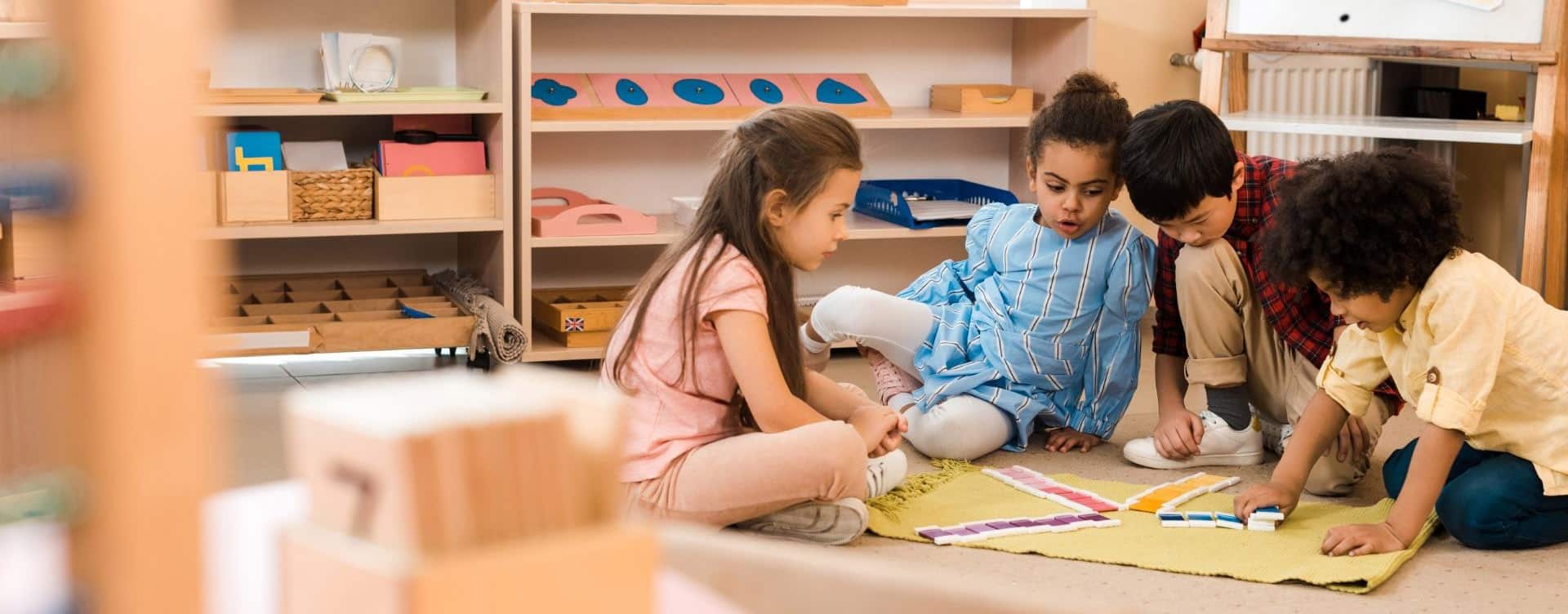
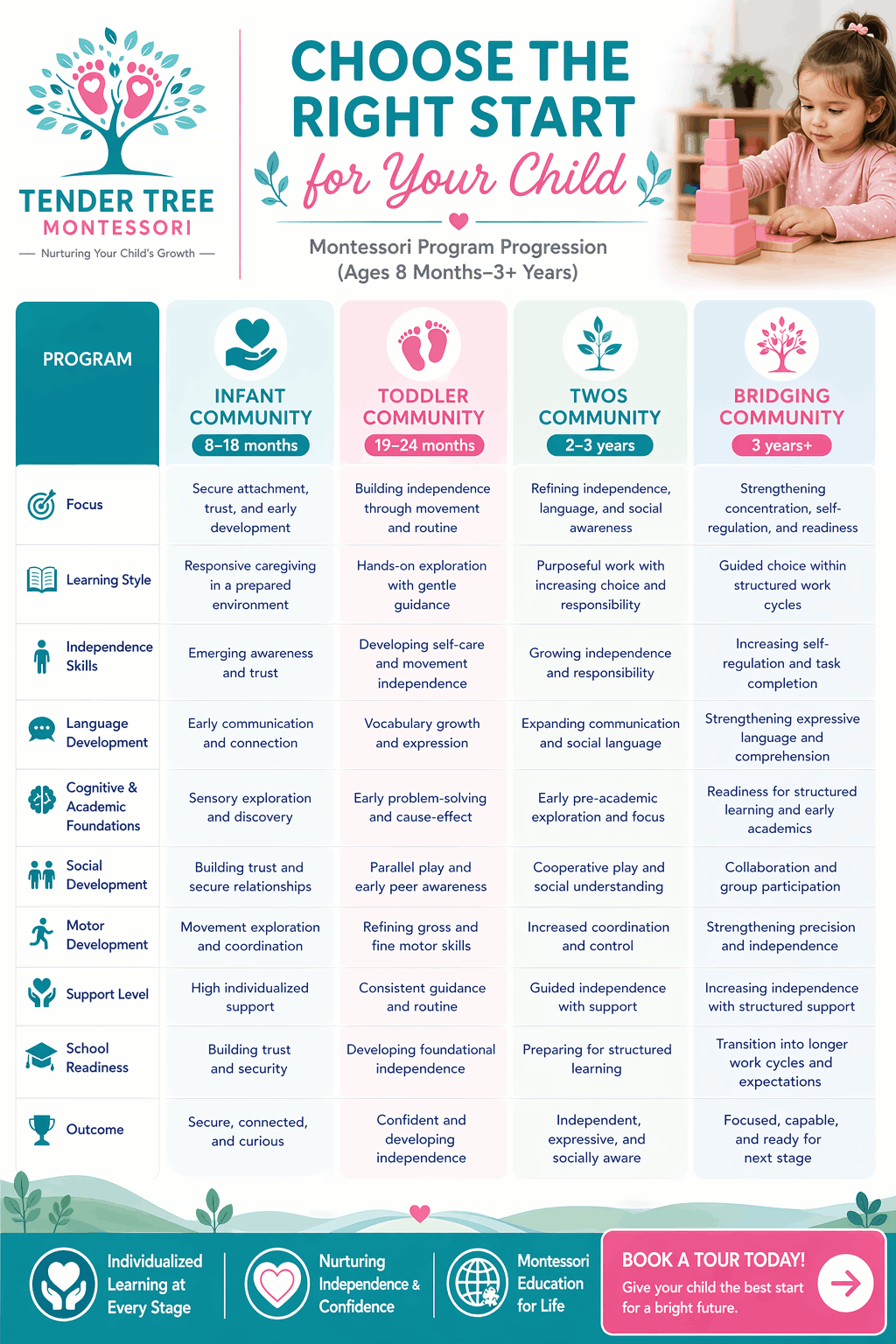
Choosing the right program for your child is an important and personal decision. In Montessori education, learning is individualized and guided by your child’s natural development. Rather than moving strictly by age, your child progresses through each community based on readiness, independence, and confidence.
At Tender Tree Montessori, each environment is thoughtfully prepared to support your child’s growth through purposeful work, meaningful relationships, and consistent routines. This allows your child to develop at their own pace while building independence, concentration, and a strong sense of self.
This guide is designed to help you understand the focus of each Montessori community and what development may look like at each stage. Transitions are guided collaboratively between educators and families to ensure your child feels supported, confident, and ready for the next step.
We believe a successful transition sets the foundation for confidence, independence, and long-term success.
We believe that thoughtful transitions lay the foundation for independence, confidence, and a lifelong love of learning.
What “Readiness” Means at Tender Tree
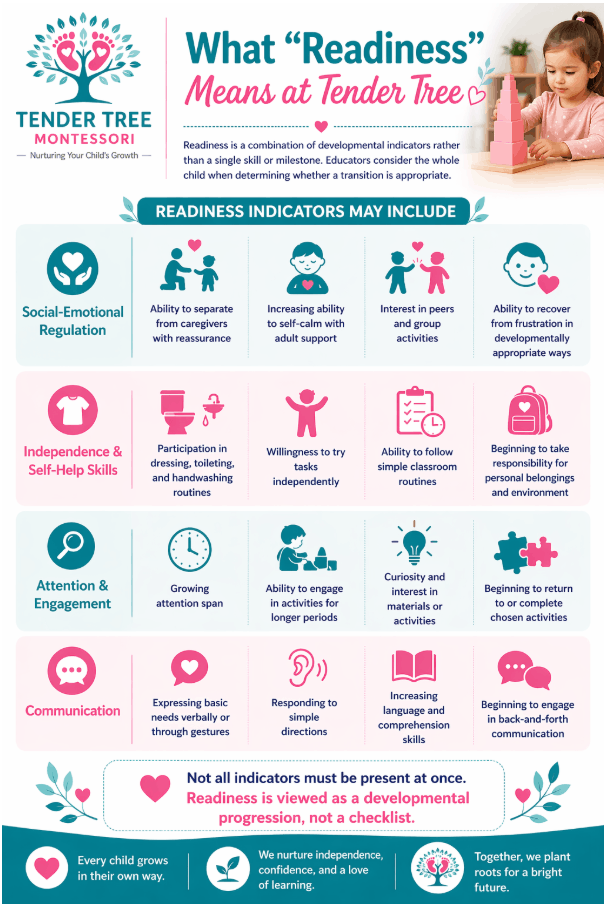
Readiness is a combination of developmental indicators rather than a single skill or milestone. Educators consider the whole child when determining whether a transition is appropriate.
Readiness Indicators May Include
Social Emotional Regulation
- Ability to separate from caregivers with reassurance
- Increasing ability to self-calm with adult support
- Interest in peers and group activities
- Ability to recover from frustration in developmentally appropriate ways
Independence & Self-Help Skills
- Participation in dressing, toileting, and handwashing routines
- Willingness to try tasks independently
- Ability to follow simple classroom routines
- Beginning to take responsibility for personal belongings and environment
Attention & Engagement
- Growing attention span
- Ability to engage in activities for longer periods
- Curiosity and interest in materials or activities
- Beginning to return to or complete chosen activities
Communication
- Expressing basic needs verbally or through gestures
- Responding to simple directions
- Increasing language and comprehension skills
- Beginning to engage in back-and-forth communication
How Transition Decisions Are Made
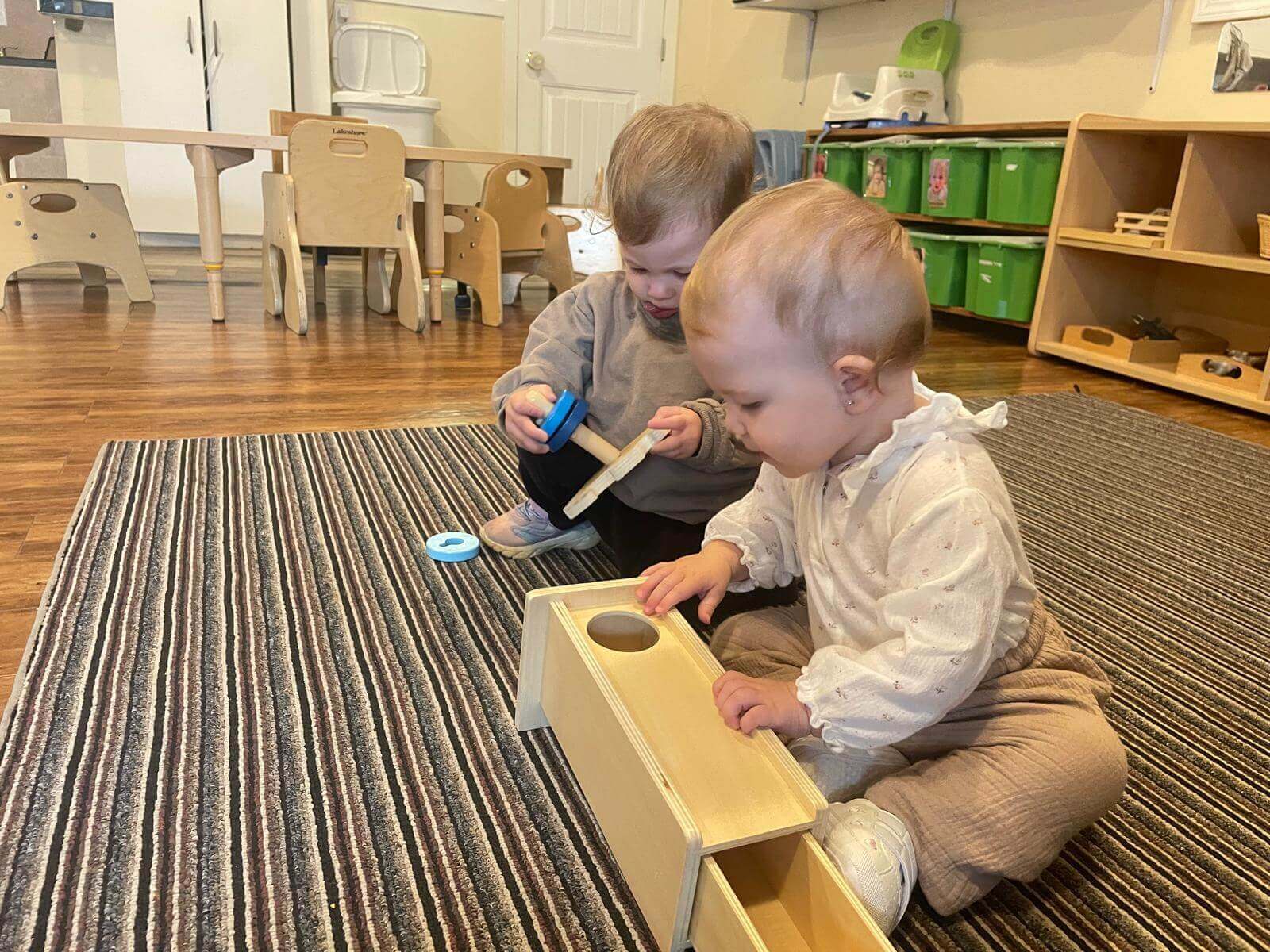
Transition decisions are made through collaboration and observation, not pressure or comparison.
Our process includes:
Final placement decisions are always made with the child’s best interest at the center.
Transition Support Options
We recognize that children adjust differently. To support successful transitions, we may offer:
Families are encouraged to share concerns, observations, and routines from home that may support their child during this time.