


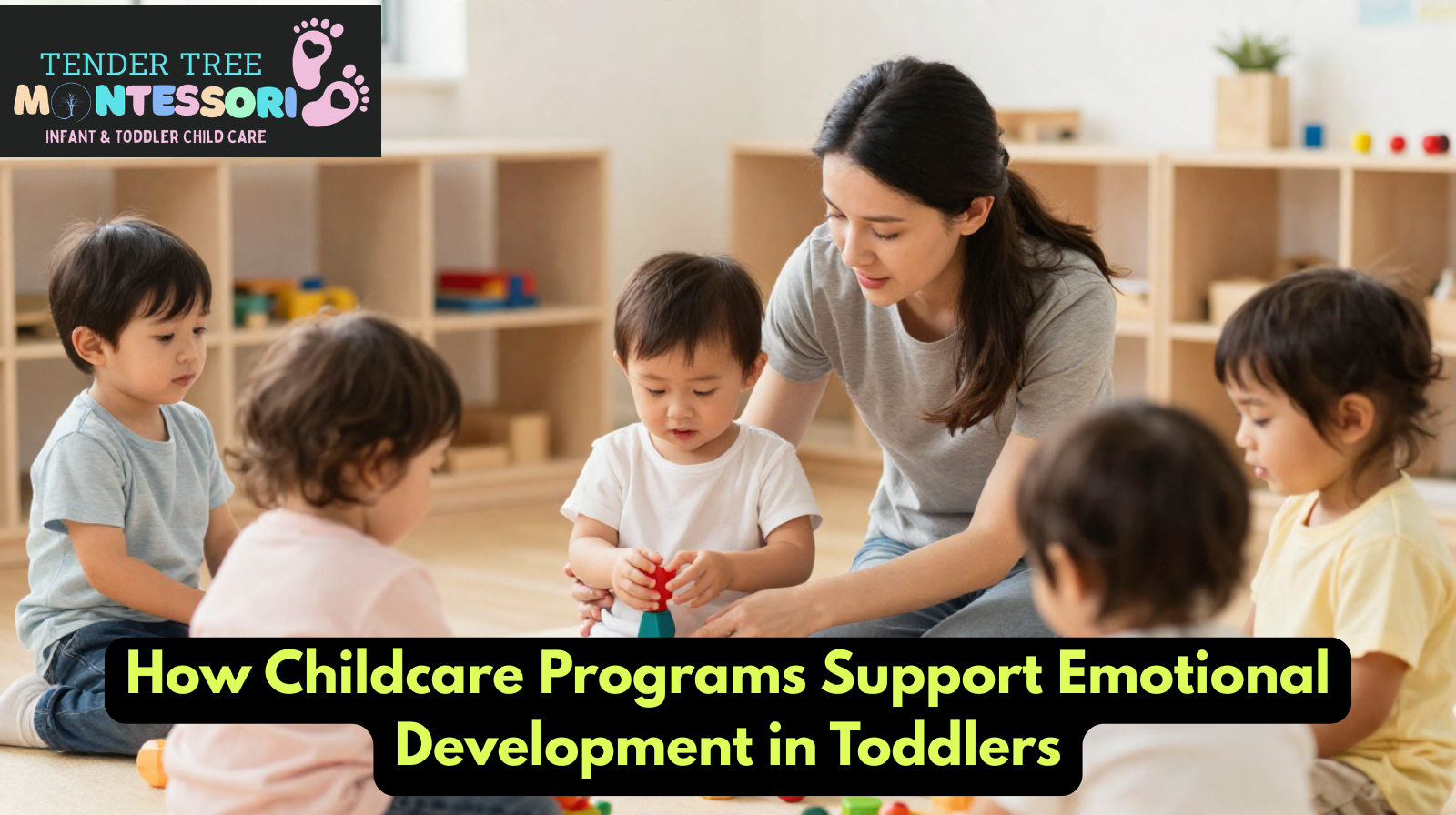
How Childcare Programs Support Emotional Development in Toddlers
Introduction
The toddler years are filled with rapid growth and discovery. During this stage, children learn far more than colors, numbers, and letters. They also begin developing the emotional skills that shape how they interact with others, handle challenges, and build confidence.
Parents often focus on physical and cognitive milestones, but emotional development is equally important. A child who can understand emotions, express feelings appropriately, and build healthy relationships is better prepared for school and life.
This is one reason why many families choose toddler childcare programs. These programs provide nurturing environments where children can safely explore emotions, develop social skills, and gain independence. At Tender Tree Montessori in Fort McMurray, emotional growth is a key part of every child’s learning journey.
Understanding Emotional Development in Toddlers
Emotional development refers to a child’s ability to understand, express, and manage emotions while forming healthy relationships with others.
Between ages one and three, toddlers experience significant emotional growth. They begin recognizing feelings such as happiness, sadness, frustration, excitement, and fear.
According to child development experts, the early years establish the foundation for emotional health and future social success.
Why Emotional Development Matters
Strong emotional skills help children:
- Build positive relationships
- Communicate effectively
- Develop self-confidence
- Solve conflicts peacefully
- Adapt to new environments
- Handle stress and disappointment
Children who receive emotional support during their early years often experience stronger academic and social outcomes later in life.
How Toddler Childcare Programs Support Emotional Growth
Quality toddler childcare programs are intentionally designed to nurture emotional development alongside learning and play.
Educators create opportunities for children to practice emotional skills every day.
Building Secure Relationships with Caregivers
Toddlers thrive when they feel safe and supported.
Professional educators provide:
- Consistent care
- Positive encouragement
- Emotional reassurance
- Predictable routines
These trusted relationships help children develop a sense of security, which is essential for emotional growth.
The Importance of Emotional Safety
When toddlers feel emotionally safe, they are more willing to:
- Explore new experiences
- Try unfamiliar activities
- Build relationships
- Express their feelings openly
This confidence supports healthy emotional development.
Teaching Emotional Awareness
One of the most important goals of toddler childcare programs is helping children understand their emotions.
Toddlers often experience strong feelings but may not yet have the vocabulary to express them.
Educators help children identify emotions through:
- Storytelling
- Visual emotion charts
- Conversations
- Role-playing activities
Helping Children Name Their Feelings
Children learn emotional language when educators use phrases such as:
- “You look happy.”
- “I can see you’re frustrated.”
- “It seems you’re feeling sad.”
As a result, children begin recognizing and communicating emotions more effectively.
Emotional Literacy Supports Future Success
Research shows that emotional literacy helps children:
- Improve self-control
- Strengthen relationships
- Enhance communication skills
- Develop empathy
These abilities continue benefiting children throughout adulthood.
Developing Self-Regulation Skills
Self-regulation is the ability to manage emotions and behaviors appropriately.
This skill does not develop automatically. It must be learned through guidance and practice.
How Childcare Programs Teach Self-Regulation
Professional educators help toddlers:
- Wait their turn
- Follow simple instructions
- Manage frustration
- Transition between activities
Through repetition and support, children gradually learn how to respond calmly to challenges.
Structured Routines Reduce Anxiety
Consistent daily routines help toddlers understand what to expect.
Predictable schedules create a sense of stability and help children feel secure.
As a result, emotional outbursts often decrease, and self-regulation improves.
Social Interaction Builds Emotional Intelligence
Emotional development and social development are closely connected.
Quality toddler childcare programs provide daily opportunities for children to interact with peers.
Learning Through Peer Relationships
During group activities, toddlers learn how to:
- Share toys
- Take turns
- Cooperate
- Communicate needs
- Resolve conflicts
These interactions teach valuable emotional lessons.
Understanding Others’ Feelings
Empathy begins developing during the toddler years.
Educators encourage empathy by helping children recognize how others feel.
For example:
- Comforting a crying friend
- Celebrating a peer’s success
- Practicing kindness
These experiences strengthen emotional intelligence.
Encouraging Independence and Confidence
Confidence plays a major role in emotional well-being.
Children gain confidence when they are encouraged to make choices and solve problems independently.
How Childcare Supports Independence
Educators provide age-appropriate opportunities for toddlers to:
- Choose activities
- Put away toys
- Wash hands independently
- Help with classroom tasks
Every success builds confidence and self-esteem.
Small Achievements Create Big Growth
When children accomplish simple tasks independently, they develop a sense of competence.
This confidence helps them approach new situations with a positive mindset.
The Role of Play in Emotional Development
Play is one of the most effective tools for emotional learning.
Research consistently shows that children learn best through play-based experiences. [Source]
Emotional Benefits of Play
Play helps children:
- Express emotions safely
- Practice problem-solving
- Build friendships
- Explore social situations
Through play, children naturally process feelings and experiences.
Dramatic Play and Emotional Expression
Pretend play allows toddlers to explore emotions in a safe environment.
Examples include:
- Playing family roles
- Caring for dolls
- Pretending to be community helpers
These activities encourage emotional understanding and empathy.
Positive Guidance Instead of Punishment
Modern childcare programs focus on teaching rather than punishing.
Professional educators use positive guidance strategies that support emotional development.
What Positive Guidance Looks Like
Educators help children:
- Understand expectations
- Learn appropriate behaviors
- Develop problem-solving skills
- Practice emotional control
Instead of focusing on mistakes, they guide children toward better choices.
Long-Term Benefits
Positive guidance helps children:
- Build self-esteem
- Develop responsibility
- Improve emotional regulation
- Strengthen relationships
These benefits extend far beyond the childcare years.
Communication Skills and Emotional Growth
Effective communication is essential for emotional development.
Many emotional challenges occur because toddlers cannot fully express their needs.
How Childcare Encourages Communication
Educators promote communication through:
- Daily conversations
- Group activities
- Storytelling sessions
- Songs and music
- Interactive learning experiences
As language skills improve, emotional frustration often decreases.
Language and Emotional Expression
Children who can express their feelings verbally are more likely to:
- Seek help when needed
- Resolve conflicts peacefully
- Build positive relationships
Communication and emotional growth develop together.
Supporting Emotional Development Through Montessori Principles
At Tender Tree Montessori, emotional growth is supported through child-centered learning experiences.
Montessori environments encourage:
- Respect
- Independence
- Responsibility
- Confidence
- Self-discovery
These principles naturally strengthen emotional development.
The Montessori Approach to Emotional Learning
Children learn emotional skills through:
Respectful Interactions
Educators model kindness, patience, and empathy.
Independence
Children gain confidence through self-directed learning opportunities.
Collaborative Learning
Group experiences teach cooperation and social awareness.
These practices help children build emotional resilience and confidence.
Why Fort McMurray Families Value Emotional Development
Families in Fort McMurray understand that emotional skills are just as important as academic readiness.
As children prepare for preschool and kindergarten, emotional competencies become increasingly valuable.
Parents throughout Fort McMurray seek childcare environments that support:
- Social growth
- Emotional regulation
- Confidence building
- Positive relationships
- School readiness
Quality toddler childcare programs help children develop these skills in supportive and nurturing environments.
At Tender Tree Montessori, families can feel confident knowing their children receive care that supports emotional, social, and cognitive growth every day.
Frequently Asked Questions
What are toddler childcare programs?
Toddler childcare programs are structured early learning environments designed for young children. They provide age-appropriate activities, social interaction, emotional support, and educational experiences that help toddlers develop cognitive, physical, social, and emotional skills in a safe and nurturing setting.
Why is emotional development important for toddlers?
Emotional development helps toddlers understand and manage their feelings while building healthy relationships with others. Strong emotional skills contribute to confidence, communication, self-regulation, and future academic success. These abilities form the foundation for positive mental health and social well-being.
How do childcare educators support emotional growth?
Childcare educators support emotional growth by creating secure relationships, teaching emotional vocabulary, modeling positive behavior, and guiding social interactions. Through consistent routines and supportive communication, they help children learn how to express feelings and manage emotions effectively.
When do toddlers begin developing emotional intelligence?
Toddlers begin developing emotional intelligence during their earliest years. Between ages one and three, children start recognizing emotions in themselves and others. Quality childcare experiences provide opportunities to strengthen empathy, self-awareness, and emotional regulation through daily interactions and guided activities.
Who benefits most from toddler childcare programs?
All toddlers can benefit from childcare programs. Children gain social, emotional, cognitive, and communication skills through structured learning and peer interaction. Parents also benefit by knowing their child is receiving professional support in a safe environment that promotes healthy development.
Conclusion
Emotional development is one of the most important aspects of early childhood growth. Children who learn to understand emotions, build positive relationships, and develop confidence are better prepared for future success in school and life.
Quality toddler childcare programs provide the nurturing environment, professional guidance, and daily experiences needed to strengthen these critical skills.
If you are looking for a trusted childcare provider in Fort McMurray, Tender Tree Montessori is dedicated to supporting every child’s emotional, social, and academic development.
Contact Tender Tree Montessori today at +1 (780) 381-5358 to learn more about enrollment opportunities and discover how our programs can help your child thrive.