


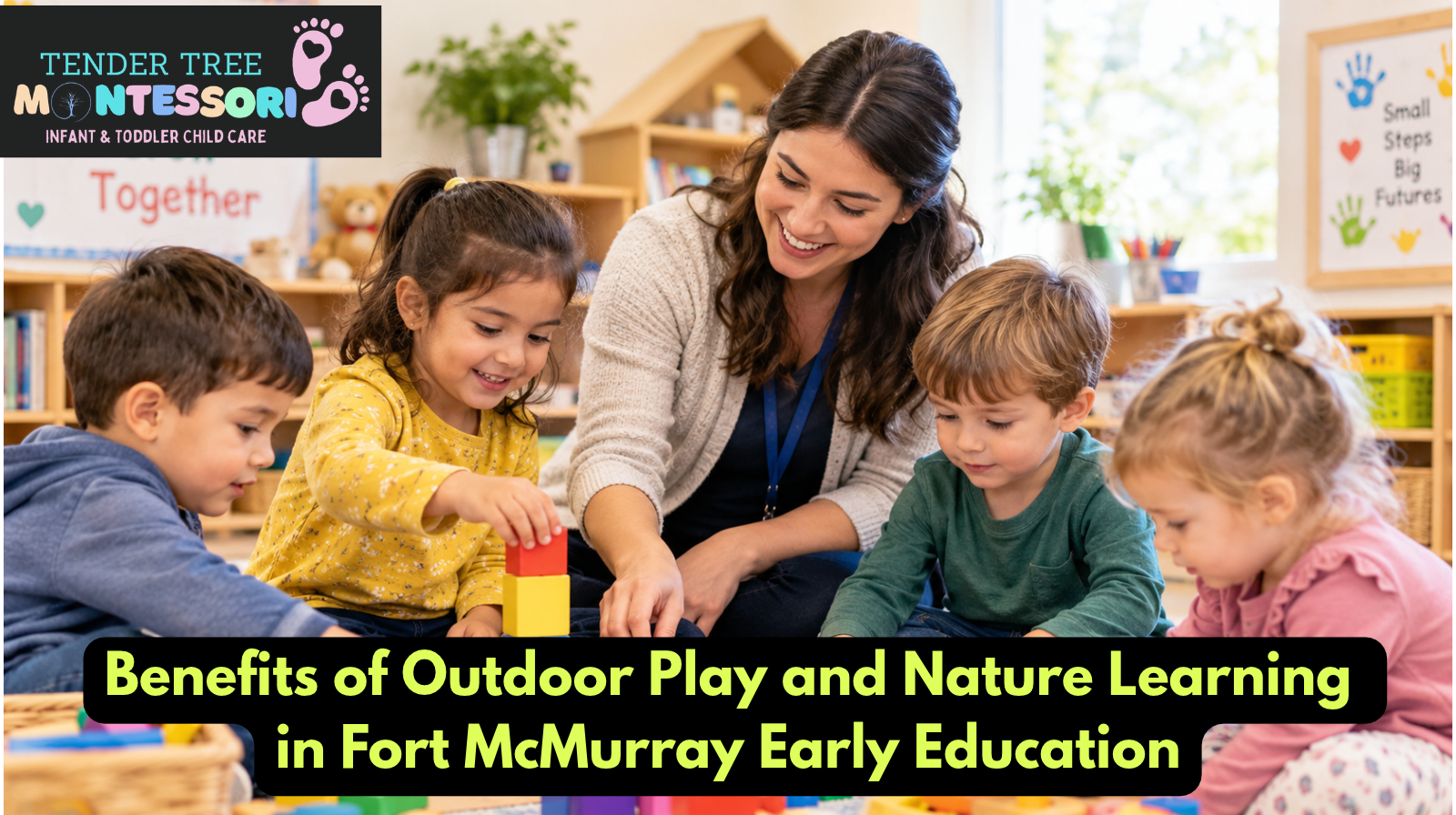
Benefits of Outdoor Play and Nature Learning in Fort McMurray Early Education
Early childhood is an important stage in a child’s development. During these formative years, children begin to explore their surroundings, develop social skills, build confidence, and discover how the world works. While classroom learning plays an essential role in early education, outdoor experiences offer equally valuable growth opportunities. From running and climbing to observing plants and exploring natural materials, outdoor play encourages children to learn through real-life experiences.
For families looking for quality early childhood education in Fort McMurray, outdoor learning can be an important factor when choosing a preschool or daycare program. Nature-based activities help children develop physical coordination, creativity, curiosity, and problem-solving skills while making learning enjoyable.
At Tender Tree Montessori, outdoor exploration and play-based experiences can complement children’s early learning journeys by encouraging independence, discovery, and meaningful interactions with their environment. Understanding the benefits of outdoor play can help parents appreciate why time outside is an important part of a balanced preschool experience.
Why Outdoor Play Matters in Early Childhood Education
Young children naturally learn by touching, moving, observing, asking questions, and experimenting. Outdoor environments provide many opportunities to explore concepts that might otherwise remain abstract in a classroom.
For example, children can learn about shapes by collecting leaves, compare sizes using rocks or pinecones, and discover basic science concepts by watching water freeze or melt. These experiences connect learning with the world around them.
Quality early childhood education in Fort McMurray should support children’s overall development, including physical, emotional, social, and cognitive growth. Outdoor activities support all these areas by giving children opportunities to explore at their own pace.
Outdoor play also allows children to release energy, practise decision-making, and develop a stronger sense of independence. When educators provide age-appropriate activities and appropriate supervision, children can explore safely while developing valuable everyday skills.
Physical Development Through Outdoor Activities
One of the most noticeable benefits of outdoor play is its positive contribution to physical development. Preschool children need regular opportunities to practise fundamental movements as their muscles, balance, and coordination continue to develop.
Popular outdoor activities for preschool children include running, jumping, balancing, climbing on age-appropriate equipment, playing simple ball games, and following movement-based challenges.
These activities can help children develop:
- Gross motor skills: Running, jumping, hopping, and climbing strengthen large muscle groups.
- Balance and coordination: Walking along safe pathways or stepping over obstacles encourages controlled movement.
- Fine motor skills: Picking up leaves, handling small natural objects under supervision, and digging in suitable sensory materials support hand coordination.
- Healthy activity habits: Enjoyable outdoor experiences can help children develop a positive attitude toward movement and active play.
Fort McMurray’s changing seasons offer different outdoor learning opportunities throughout the year. In warmer months, children may explore playgrounds, gardens, and natural surroundings. During colder weather, appropriately dressed children can enjoy supervised snow play when temperatures and conditions are safe.
Educators should adapt activities to children’s ages, abilities, weather conditions, and individual needs.
Supporting Cognitive Development Through Nature Learning
Nature provides an engaging environment for children to observe, compare, predict, investigate, and solve problems. These experiences support early scientific thinking and help children understand cause and effect.
For example, a simple activity involving leaves can encourage children to notice differences in colour, shape, size, and texture. Observing puddles after rainfall can lead to conversations about water, weather, and the changing environment.
Through outdoor activities for preschool children, educators can introduce early mathematics and science concepts in practical ways.
Children may practise counting natural objects, sorting materials by colour, identifying patterns, estimating distances, and comparing quantities. These activities make foundational learning more interactive and memorable.
Nature exploration also encourages curiosity. When children ask why snow melts, where birds find food, or how plants grow, educators can guide them toward discovering answers through observation and age-appropriate discussion.
These experiences help develop concentration, critical thinking, and problem-solving skills that can support future academic learning.
The Role of Play-Based Learning in Preschool Programs
Children learn particularly well when they are actively involved in meaningful experiences. Instead of relying only on direct instruction, play-based learning allows children to investigate ideas through activities that interest them.
Play-based learning Fort McMurray can incorporate outdoor games, imaginative play, nature walks, sensory exploration, and simple group challenges. Educators can connect these activities with learning objectives while allowing children room to make choices and explore independently.
For example, children building a pretend campsite with suitable play materials may practise communication, teamwork, spatial awareness, and creative thinking. A garden activity may introduce responsibility, plant growth, and the importance of caring for living things.
Play-based learning can help children:
- Develop imagination and creative thinking.
- Practise sharing, cooperation, and turn-taking.
- Build confidence through independent discovery.
- Strengthen language skills by describing experiences.
- Learn how to approach challenges and try different solutions.
The aim is not simply to keep children entertained. Well-planned play creates meaningful learning opportunities that support development while respecting children’s interests and developmental stages.
Building Social Skills and Emotional Confidence
Outdoor environments often create natural opportunities for children to interact, negotiate, cooperate, and solve small disagreements. These everyday situations can help preschoolers develop important social and emotional skills.
During group games, children learn to follow rules, wait for their turns, communicate their ideas, and consider the needs of others. Collaborative activities, such as collecting leaves or working together on a nature display, can encourage teamwork and a sense of belonging.
Outdoor play can also help children build emotional confidence. Trying a new activity, navigating a suitable obstacle, or completing a simple task independently can create feelings of achievement.
Educators can support these experiences by offering encouragement, acknowledging children’s efforts, and helping them manage frustration when an activity becomes challenging.
Nature learning may also provide calm, sensory-rich experiences. Listening to birds, observing trees, or exploring natural textures can encourage children to slow down and pay attention to their surroundings.
For families exploring Preschool programs in Fort McMurray, it is worth considering how a program supports not only academic readiness but also emotional well-being, relationships, and confidence.
Exploring Fort McMurray’s Natural Environment
Fort McMurray and the surrounding Wood Buffalo region offer a distinctive northern environment that can inspire children’s curiosity about nature. Seasonal changes provide opportunities to observe differences in temperature, daylight, plants, snow, and local wildlife.
Educators can use these familiar surroundings to introduce children to environmental awareness through age-appropriate activities.
Examples include:
- Seasonal observation: Comparing trees, leaves, and outdoor conditions across different seasons.
- Snow and ice exploration: Observing how snow feels, changes shape, and melts under suitable conditions.
- Nature walks: Looking for interesting natural patterns while staying on safe, approved routes.
- Gardening activities: Learning how plants grow and what they need to survive.
- Weather discussions: Talking about clouds, wind, rain, and temperature using simple language.
These experiences help children form connections with the environment in which they live. They can also encourage respect for living things and an early understanding of environmental responsibility.
Outdoor learning should always account for local conditions, including cold temperatures, wind chill, air quality, wildlife considerations, and seasonal hazards. Educators should follow appropriate supervision and safety procedures.
Encouraging Language and Communication Skills
Outdoor play is also an excellent opportunity to develop vocabulary and communication skills. Children encounter new objects, sensations, and experiences that encourage them to describe what they see and ask questions.
During a nature walk, an educator might introduce words such as rough, smooth, damp, frozen, tall, tiny, or slippery. Children can then use these words to describe their observations and compare objects.
Storytelling can also be incorporated into outdoor activities. Children might invent a story about a bird, imagine a forest adventure, or describe what they would plant in a garden.
Group play encourages children to communicate their ideas, listen to others, and practise expressing their needs. Educators can support language development by asking open-ended questions, introducing new vocabulary, and giving children enough time to respond.
For multilingual families and children developing communication skills at different rates, visual prompts, demonstrations, repetition, and supportive conversation can make outdoor learning more accessible.
These everyday interactions show how play-based learning Fort McMurray can support communication alongside physical, social, and cognitive development.
Outdoor Learning Ideas for Different Seasons
A balanced outdoor program can change throughout the year to reflect the local climate and children’s developmental needs.
Spring: Discovering Change
Spring activities can include observing melting snow, noticing new plant growth, exploring puddles, and discussing seasonal changes. Children can also participate in supervised gardening activities when conditions allow.
Summer: Exploring Nature
Warmer weather offers opportunities for nature walks, outdoor art, water play with appropriate supervision, movement games, and sensory activities. Children can explore textures, colours, sounds, and natural patterns.
Autumn: Learning Through Leaves
Children can compare leaves, observe changing colours, collect suitable natural materials, and create nature-inspired artwork. These activities support classification, creativity, and early mathematics.
Winter: Safe Snow Exploration
When weather conditions are appropriate, children can explore snow, make simple snow structures, observe ice, and participate in outdoor movement games. Warm clothing, frequent checks for comfort, and clear limits on outdoor time are particularly important.
These seasonal activities can enrich Preschool programs in Fort McMurray by connecting children’s learning experiences with the environment they see every day.
Keeping Outdoor Play Safe and Inclusive
Outdoor learning is most effective when children can participate in an environment that is safe, welcoming, and suited to their needs.
Educators should assess outdoor spaces and activities before use, provide active supervision, and establish clear boundaries. Weather conditions should be checked regularly, particularly during Fort McMurray’s colder months.
Appropriate clothing is essential. Children may need weather-resistant outerwear, insulated footwear, gloves, hats, and additional layers depending on the season. Outdoor time should be adjusted when extreme cold, poor air quality, or other environmental conditions create safety concerns.
Activities should also accommodate different abilities, interests, sensory preferences, and developmental stages. Some children may enjoy energetic games, while others may prefer observing insects, listening to natural sounds, or exploring materials at a quieter pace.
An inclusive approach ensures that every child has opportunities to participate, build confidence, and experience the benefits of outdoor learning.
Parents can support these experiences by providing suitable seasonal clothing, communicating individual needs, and encouraging curiosity about nature at home.
Choosing the Right Early Education Program in Fort McMurray
When evaluating an early learning centre, parents should look beyond the classroom environment and consider how the program supports children’s complete development.
Families researching early childhood education Fort McMurray may wish to ask about outdoor play schedules, seasonal activities, supervision practices, educator qualifications, and how outdoor experiences connect with the curriculum.
It can also be helpful to understand how the centre balances structured activities with child-led exploration, supports social and emotional development, and adapts learning opportunities for different ages and abilities.
Tender Tree Montessori is a local option for families exploring early learning and childcare opportunities in Fort McMurray. Parents can visit the centre’s website to learn more about its approach, available programs, and enrolment information.
Choosing a program that values exploration, independence, meaningful play, and age-appropriate outdoor experiences can help children develop a strong foundation for lifelong learning.
Conclusion: Helping Children Learn Through Nature
Outdoor play is much more than a break from indoor activities. It offers valuable opportunities for children to develop physical coordination, curiosity, communication, creativity, confidence, and social skills. Nature-based experiences also help children connect classroom concepts with the world around them.
For Fort McMurray families, seasonal outdoor learning can make early education more engaging and meaningful. Through thoughtfully planned activities, supportive educators, and safe opportunities to explore, children can discover new interests and build skills that prepare them for future learning.
If you are looking for Preschool programs in Fort McMurray, consider how outdoor play, nature exploration, and play-based learning Fort McMurray fit into the learning experience.
Frequently Asked Questions (FAQs)
Why is outdoor play important for preschool children?
Outdoor play supports physical development, creativity, social interaction, problem-solving, and emotional confidence. It also gives children opportunities to explore their surroundings and learn through direct experiences.
What are some outdoor activities for preschool children in Fort McMurray?
Age-appropriate activities include nature walks, leaf collection, supervised snow play, gardening, outdoor art, movement games, and observing seasonal changes. Activities should always be adapted to weather conditions and children’s needs.
How does play-based learning help young children?
Play-based learning encourages children to develop communication, early mathematics, creativity, cooperation, and critical thinking through enjoyable, hands-on activities.
Can children learn science outdoors?
Yes. Children can explore basic scientific ideas by observing plants, comparing natural materials, noticing weather changes, and investigating how snow and ice change over time.
How can parents choose a preschool with good outdoor learning opportunities?
Parents can ask about outdoor schedules, safety procedures, seasonal activities, educator supervision, inclusive participation, and how outdoor experiences support the preschool curriculum.
Where can families learn more about Tender Tree Montessori?
Families can visit https://tendertreedaycare.com/ to explore the centre’s early learning information, available programs, and enrolment details.